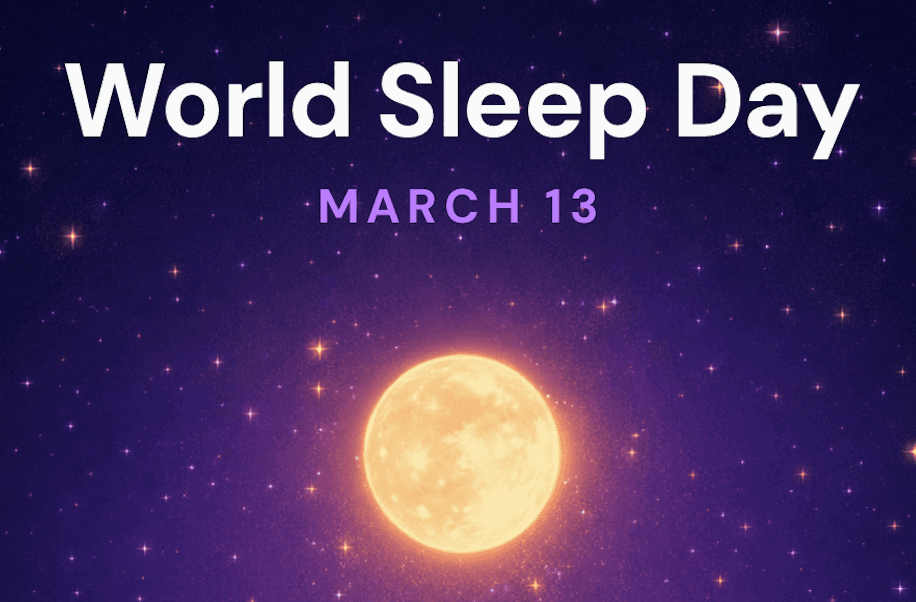
Every year, on the Friday before the spring equinox, the world pauses for a moment to talk about something most of us don't think nearly enough about: sleep.
World Sleep Day is a global awareness event organized by the World Sleep Society, dedicated to shining a light on the importance of healthy sleep — and the very real consequences of not getting it. This year's theme is a reminder that sleep isn't a passive activity, a luxury, or something you can afford to negotiate with. It's the single most powerful recovery tool your body and mind have access to. Every single night.
At Rest, we think about sleep every day. And this World Sleep Day, we want to talk honestly about what happens when we don't take it seriously enough.
The Problem With "I'll Sleep When I Can"
We live in a culture that quietly rewards exhaustion. Staying up late to finish one more thing, waking up early to get ahead, pushing through tiredness with caffeine and willpower — these are treated as signs of dedication. Hustle.
But the science tells a different story.
Sleep deprivation affects cognitive function, emotional regulation, metabolism, immune response, and long-term cardiovascular health. A single night of poor sleep is enough to measurably impair your decision-making, your reaction time, and your ability to manage stress. Chronic sleep loss — even mild, accumulated over weeks — has been linked to anxiety, depression, weight gain, and increased risk of serious disease.
The problem isn't just that we're tired. It's that we make our worst decisions when we are.
Late Night Mistakes: What Exhaustion Really Looks Like
This year, Rest launched Late Night Mistakes, a campaign built around a simple but uncomfortable truth: the choices we make when we're sleep-deprived aren't really our choices. They're the choices of a brain running on empty.
Late night mistakes aren't dramatic. They're the text you sent that you regret. The argument that escalated because you had nothing left in the tank. The meal you ate not because you were hungry, but because your body was desperately looking for energy. The scroll that turned into two hours of nothing.
The campaign was designed to make people recognize their own patterns — the small, quiet ways that sleep deprivation shows up in everyday life before it becomes a crisis. Because by the time most people decide they have a sleep problem, it's been a problem for months. Sometimes years.
Recognition is the first step. But recognition alone doesn't fix anything.
Why Most Sleep Advice Doesn't Work
If you've ever struggled to sleep consistently, you've probably tried some version of the standard advice: avoid screens before bed, keep a consistent schedule, try melatonin, download a meditation app, get some white noise going.
And maybe some of it helped, a little, for a while.
The issue is that most sleep advice treats the symptoms (the difficulty falling asleep, the waking up at 3am, the unrefreshing mornings) without addressing what's actually driving them. Poor sleep is rarely just about the bedroom environment or a magnesium deficiency. It's a behavioral and cognitive pattern, often deeply ingrained, that requires a structured approach to actually change.
That's where the science comes in.
The Approach That Actually Works
Cognitive Behavioral Therapy for Insomnia — CBT-I — is the most rigorously studied, clinically validated approach to treating sleep problems. It's recommended as the first-line treatment for chronic insomnia by sleep medicine organizations worldwide, consistently outperforming sleep medication in long-term outcomes.
CBT-I works by targeting the thoughts, behaviors, and habits that perpetuate poor sleep — not just the night-to-night symptoms. It retrains the way your brain relates to sleep, breaking the cycles of anxiety and hyperarousal that keep so many people stuck.
The challenge has always been access. Traditional CBT-I requires working with a trained specialist over multiple sessions — something most people either can't access or can't afford.
Rest was built to change that.
What Rest Actually Is
Rest is an AI-powered sleep program built on the principles of CBT-I. Not a playlist. Not a collection of relaxation sounds. A structured, personalized program that guides you through the same evidence-based process used in clinical settings — adapted to your schedule, your sleep patterns, and your specific challenges.
The program works with you over time, not just on one rough night. It tracks your progress, adjusts to your responses, and gives you the tools to understand what's actually happening with your sleep — and what to do about it.
The results speak for themselves. Users who complete the program report falling asleep faster, waking up less during the night, and, more importantly, feeling the difference during the day. In their energy. Their mood. Their focus. Their relationships.
That's what we mean when we say Start Sleeping, Get Dreaming. It's not just about more hours in bed. It's about what becomes possible when you're finally rested.
This World Sleep Day, Make a Real Change
Awareness is valuable. But World Sleep Day is most meaningful when it becomes a turning point — a moment where something shifts from "I know I should sleep better" to "I'm actually going to do something about it."
If you've been living with poor sleep — whether it's occasional insomnia, chronic restlessness, or just never feeling truly rested — today is a good day to start.
Not because it's a special day. But because you've probably been waiting long enough.
There's a version of you that sleeps well, wakes up with energy, and has the capacity to show up fully for the things that matter. That version isn't far away. It just needs the right foundation.
Ready to build it?
Start the Rest Program today.